Facebook
Twitter
Google+
YouTube
CALL US
860-254-6189
  • Home
  • Meet Our Sleep Apnea Specialist
  • Sleep Apnea
    • Sleep Apnea Treatments
      • Oral Appliances
      • CPAP Therapy
      • Surgery for Sleep Apnea
    • Why You Should See Your Dentist
    • The Symptoms & Causes of Sleep Apnea
    • The Dangers of Untreated Sleep Apnea
    • Resources
      • How Snoring Affects Relationships
      • Sleep Apnea & Your Mental Health
      • Sleep Apnea & Your Child
      • Sleep Apnea & Pregnancy
      • Sleep Apnea & ADHD
      • Sleep Apnea and Hypertension
      • Mouth & Throat Exercises for Sleep Apnea
  • Sleep Apnea Test & Treatment Financing
  • Testimonials
  • Contact

Improve Your Sleep Quality with  Mouth & Throat Exercises 

Sleep apnea, a condition where breathing repeatedly stops and starts during sleep, can lead to disrupted rest, fatigue, and even serious health issues. While treatments like CPAP machines and oral appliances are well-known, there is an often-overlooked approach: mouth and throat exercises. These exercises, focusing on strengthening the muscles involved in breathing, can be an effective and natural method to improve your sleep apnea symptoms.

If you’re dealing with sleep apnea in Windsor, Bloomfield, East Windsor, Hartford or nearby areas, Dr. Roberta Garceau is a trusted sleep specialist in Windsor, CT. Contact Dr. Garceau by calling (860) 254-6189 to learn how mouth and throat exercises work, their benefits, and how they can help you achieve better sleep.

The Role of Mouth and Throat Exercises in Sleep Apnea

Mouth and throat exercises, also called “oropharyngeal exercises,” can play a significant role in improving your obstructive sleep apnea symptoms. These exercises focus on strengthening the muscles that help keep the airway open during sleep. By improving muscle tone and flexibility, they can reduce the likelihood of airway collapse, allowing for smoother breathing throughout the night.

Benefits of Mouth & Throat Exercises for Sleep Apnea

While these exercises might seem simple, they can provide substantial benefits for people suffering from sleep apnea. These exercises are particularly beneficial for individuals with mild sleep apnea, as they help strengthen the muscles involved in keeping the airway open. Here are some of the advantages:

Improved Breathing

By strengthening the muscles of the mouth, throat, and jaw, these exercises help prevent the airway from collapsing. This can lead to more consistent airflow during sleep, reducing the frequency and severity of apneic episodes. These exercises can be particularly effective for individuals with mild to moderate obstructive sleep apnea, helping to maintain consistent airflow during sleep.

Reduction in Snoring

Snoring and sleep apnea are often signs that your airway is partially obstructed. Strengthening the muscles that control your airway can significantly reduce snoring, improving your quality of sleep and your partner’s.

Non-invasive and Affordable

Unlike treatments that require medical devices or surgery, mouth and throat exercises are a simple, non-invasive, and low-cost solution for managing sleep apnea. They can be done at home and don’t require any special equipment.

Improved Sleep Quality

Regular practice of these exercises can help you sleep more soundly and wake up feeling more rested, without the interruptions caused by apnea episodes.

Effective Mouth & Throat Exercises for Sleep Apnea

Here’s a list of exercises that may help alleviate sleep apnea symptoms:

Tongue Exercises

The tongue plays a vital role in keeping the airway open. Strengthening the tongue muscles can help prevent airway obstruction during sleep.

  • Tongue Slide: Place the tip of your tongue on the roof of your mouth, then slide your tongue backward toward the throat. Repeat this 10 times, holding for a few seconds each time.
  • Tongue Push-ups: Press the tip of your tongue against the roof of your mouth. Hold for a few seconds and release. Perform this exercise 10–15 times a day.

Soft Palate Exercises

The soft palate (the back of the roof of your mouth) needs to stay firm to prevent the airway from collapsing. Soft palate exercises can help improve control over this area.

  • The “Say Ah” Exercise: Open your mouth wide and say “ah” while holding the sound for 5-10 seconds. Repeat this 5-10 times each day.
  • Palate Sucking Exercise: Place your tongue on the roof of your mouth. Suck air in, lifting the soft palate as high as possible. Hold for 10 seconds, then relax. Do this 5 times.

Throat and Jaw Exercises

Tightening and toning the muscles of the throat and jaw can help reduce sleep apnea symptoms, particularly snoring.

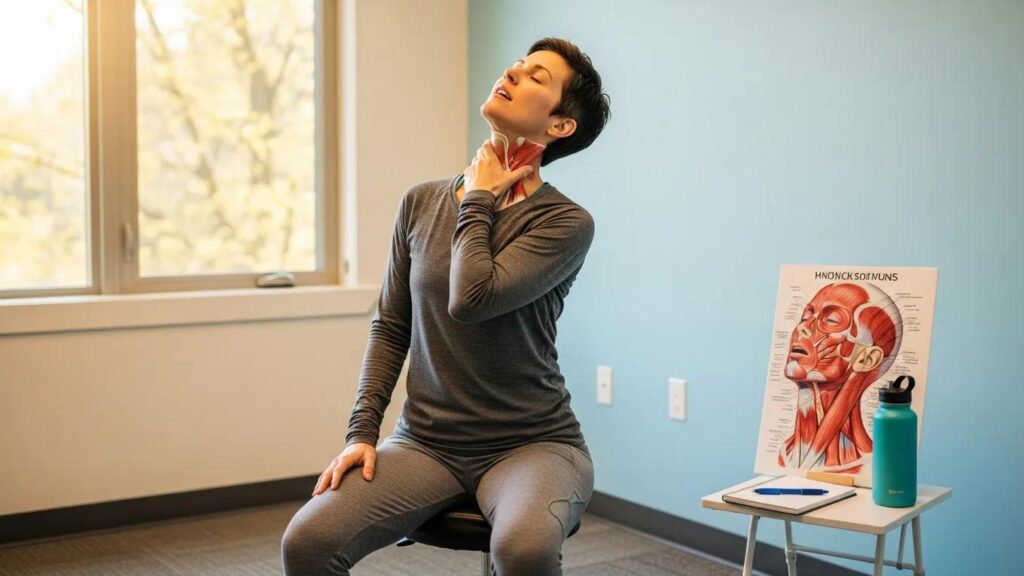
  • Neck and Jaw Push-ups: Sit up straight and press your chin to your chest, stretching the muscles in your neck. Then tilt your head back as far as possible, lifting your chin upward. Do this 5-10 times daily.
  • Mouth Opening and Closing: Open your mouth wide, hold for a few seconds, and then close it slowly. Repeat this 10 times.

Breathing Exercises

Breathing exercises can improve your lung capacity and the strength of the muscles involved in breathing.

  • Pursed Lip Breathing: Inhale slowly through your nose for a count of 2, then purse your lips and exhale slowly for a count of 4. This helps control airflow and strengthens the muscles in your airways.
  • Diaphragmatic Breathing: Place one hand on your chest and the other on your abdomen. Take a deep breath, making sure your abdomen rises rather than your chest. This strengthens the diaphragm and can improve airflow.

Frequently Asked Questions

How long does it take to see results from mouth and throat exercises for sleep apnea?
Can mouth and throat exercises completely eliminate the need for a CPAP machine?
Are mouth and throat exercises safe to try on my own?
How often should I do mouth and throat exercises for sleep apnea?
How long does it take to see results from mouth and throat exercises for sleep apnea?

The time it takes to see results can vary depending on the severity of your sleep apnea and how consistently you practice the exercises. Many people begin noticing improvements in their breathing and sleep quality within 2-3 weeks of regular practice. However, for significant and long-term results, it’s important to stick with the exercises for several months.

Can mouth and throat exercises completely eliminate the need for a CPAP machine?

While mouth and throat exercises can significantly improve symptoms of sleep apnea, they may not be a complete substitute for a CPAP machine, especially in severe cases. These exercises are most effective for mild to moderate sleep apnea and can be a valuable part of a comprehensive approach to treat sleep apnea. For severe cases, combining exercises with other treatments, such as a CPAP or oral appliance, may provide the best results.

Are mouth and throat exercises safe to try on my own?

Yes, mouth and throat exercises are generally safe to try on your own, as they do not involve any invasive procedures or medications. However, it’s always a good idea to consult with a healthcare provider before starting a new exercise routine, especially if you have other medical conditions, to ensure you are treating sleep apnea effectively.

How often should I do mouth and throat exercises for sleep apnea?

For the best results, it’s recommended to practice mouth and throat exercises at least 2-3 times per day. Consistency is key to strengthening the muscles of the mouth, throat, and airway. Make these exercises a part of your daily routine for maximum benefit.

Say Goodbye to Restless Nights in Windsor, CT

Mouth and throat exercises are a natural and effective way to manage sleep apnea symptoms. By also targeting facial muscles, these exercises can further enhance muscle tone and improve breathing efficiency. By strengthening the muscles involved in breathing, these exercises can improve airflow, reduce snoring, and enhance sleep quality. While they may not replace other treatments like CPAP or oral appliances, they are a valuable part of a comprehensive approach to sleep apnea management.

If you’re ready to take the next step toward better sleep, consult with Dr. Roberta Garceau by calling (860) 254-6189 for guidance through personalized sleep apnea treatments. 

Hours

Monday Closed
Tuesday 8:00am to 5:00pm
Wednesday 8:00am to 5:00pm
Thursday 8:00am to 5:00pm
Friday 8:00am to 5:00pm

Contact Us

YOUR DENTIST IN WINDSOR

Dr. Roberta Garceau
62 Bloomfield Avenue, Windsor, CT 06095

New Patients: 860-254-6189
Current Patients: 860-688-4325

Find Us